
The Journey Towards Self Actualisation: Becoming and Unbecoming (IB Visual Arts HL)
May 2026
Curatorial Rationale
Who do you want them to see?” This question spearheaded my exhibition which is centered around my identity. Who I am, who I was, who I will be. The catch is, it all exists in equilibrium, one loop, one unbreakable cycle. What exists now, existed before in another form and will continue to exist. My exhibition expresses the navigation of my own identity amidst cultural erosion, external and even technological influence.
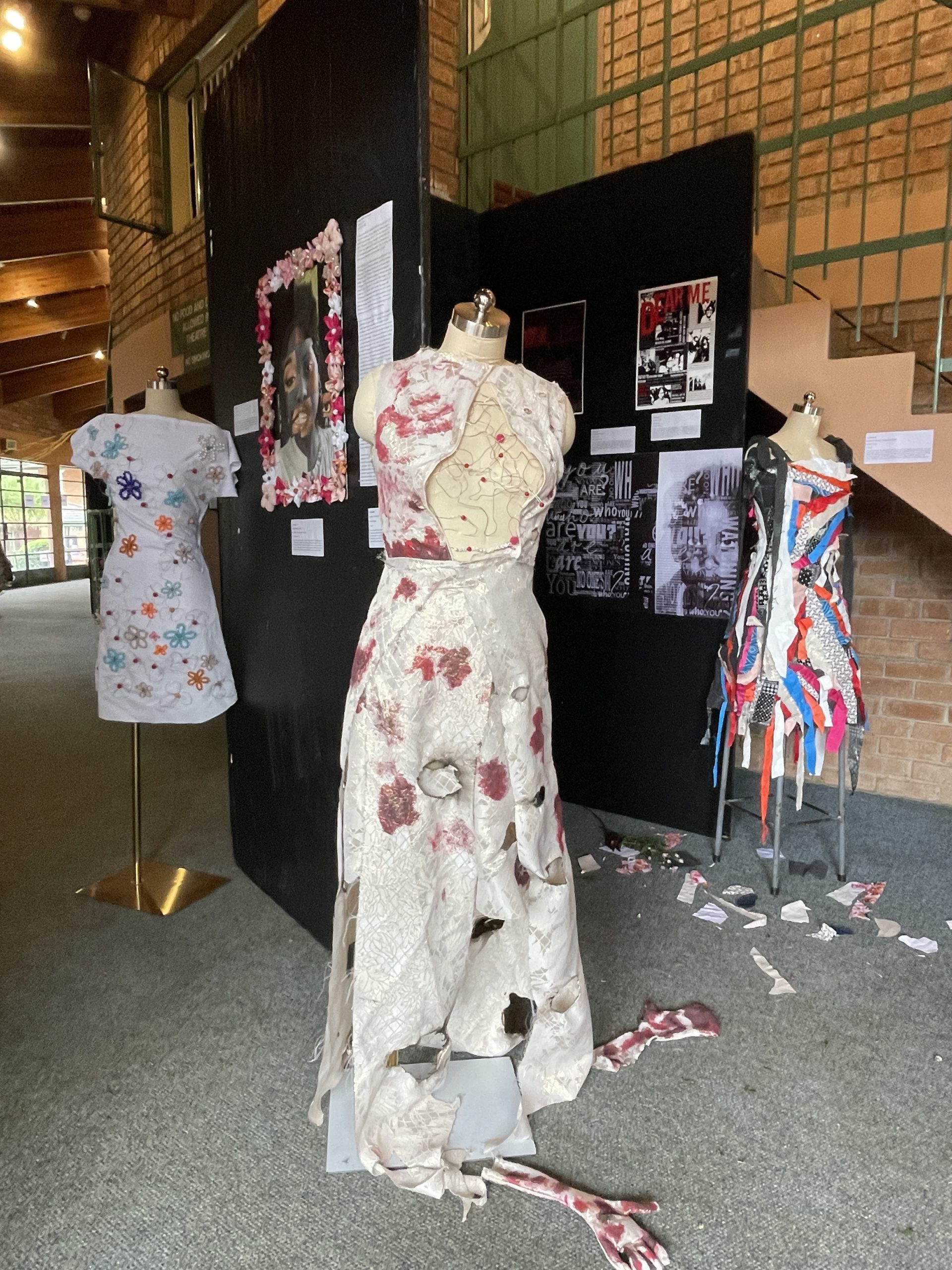
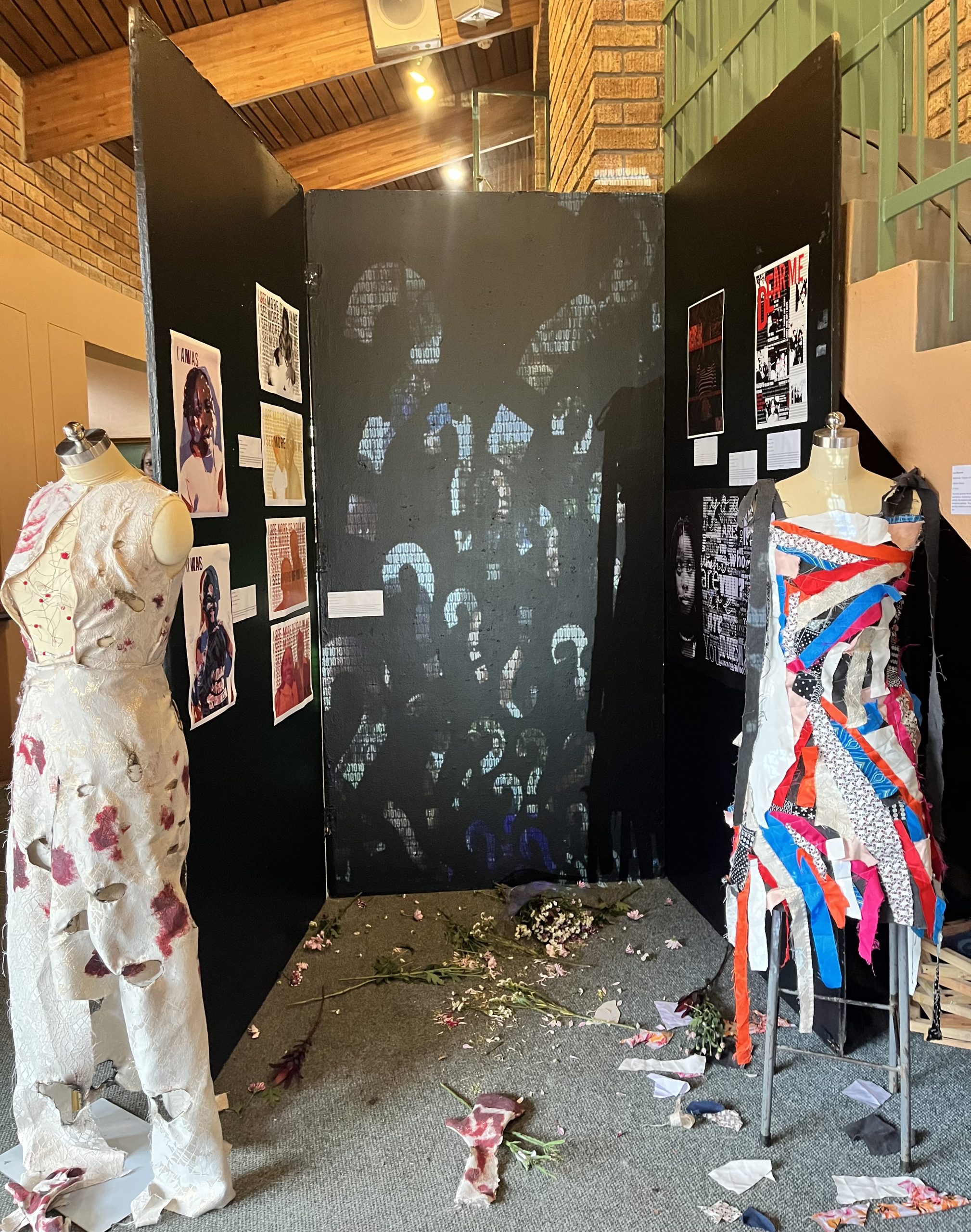
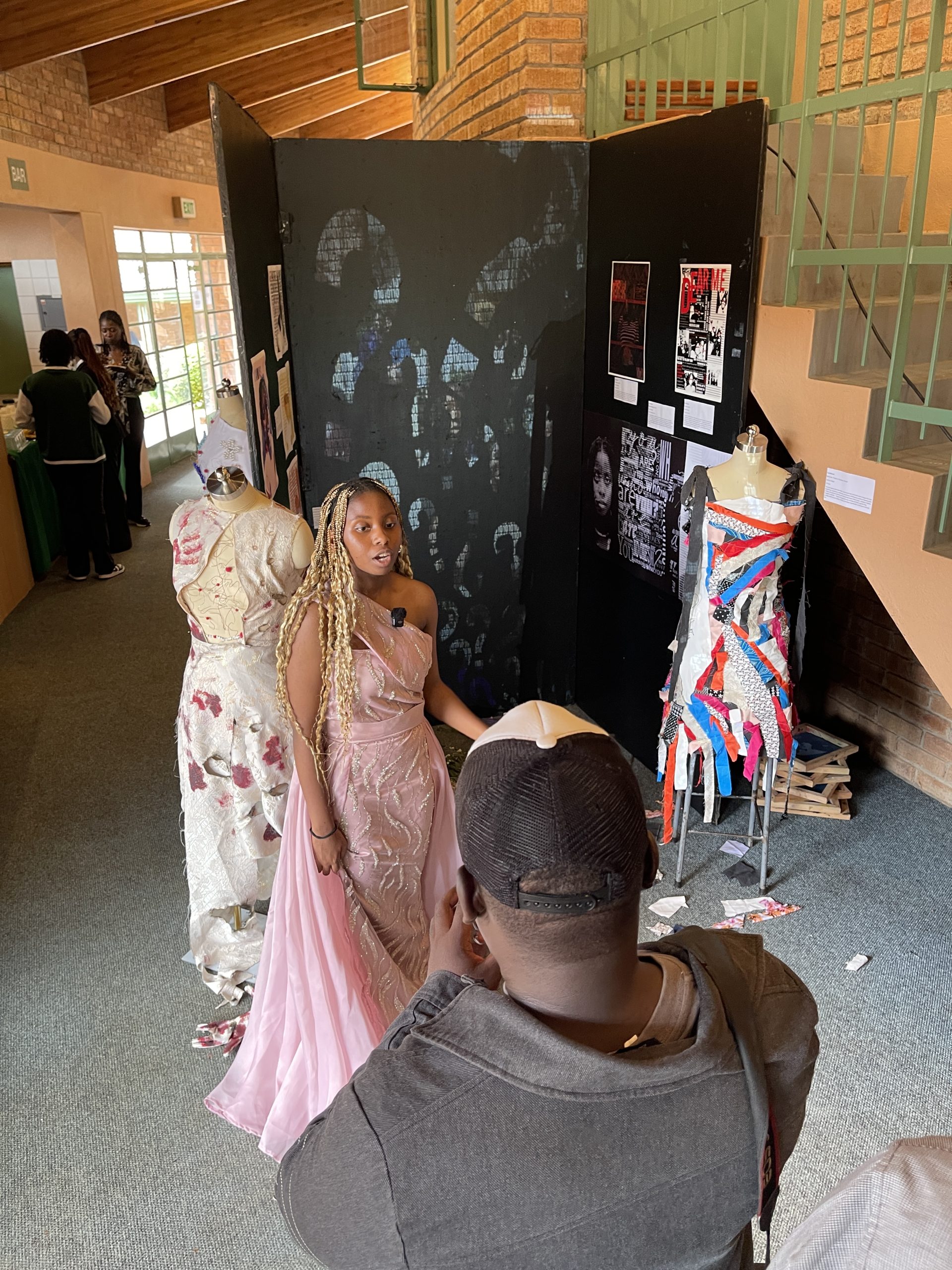
The arrangement of my exhibition stems from the concept of a funeral, but instead of mourning, it is a ceremony honoring transformation. The audience first interacts with a photo frame tribute (Petals and Pieces), reminiscent of memorial portraits at funerals. It functions as a gateway to reflection: who is being remembered? The boards are arranged such that it imitates a coffin but without a body. It suggests that for one version of the self to be born another must “die”. However, death is not loss. The empty coffin functions as a transitional device rather than an endpoint. It indicates that identity sheds skin in the form of outdated assumptions and imposed labels in order to be reborn. These are represented throughout the exhibition by the binary code present in the background of the digital pieces and explores the navigation between these expectations and the fight to define identity within your own metrics. The binary code acts as a reminder that preconceived notions will always be a perpetual aspect of personalities. Ultimately, the coffin serves as a symbol of metamorphosis. It embodies the paradox that destruction and creation can coexist within growth.
Inside the “coffin” are memoirs (Dear Me, Internalised). This decision draws from Shona cultural practices in Zimbabwe, where individuals are buried with precious belongings. By referencing this, I acknowledge my culture while also questioning how much of it remains within me. Displayed inside are also transition markers of identity (I See More Of You In Me; I Was, I Am) which depict the stages and the progress made. They are reminders of where I came from, who I am and who I aspire to be. However, Decoded Identity also serves as an indication of retrogression as it questions the concept of “becoming,” which suggests that as one grows older, their personality reaches its true state but it favours the idea that the initial versions are truly the most authentic versions of ourselves as they were not affected by technology or any cultural standards and opinions. This shows that even within defining identity there are grey areas and potential gaslighting that we do to ourselves to allow us to be more content with who we are now instead of the truth that indicates the superficiality of present personalities.
The fashion pieces (Chrysalis, Growth, Madhende) are arranged outside of the “coffin” to mimic guardians that protect what is within. Similar fabric, wire and beads were used throughout all the pieces to exemplify the continuity of identity despite it being in different stages. They also represent a culmination of part of the metamorphosis, adding onto the symbolism of a coffin without a body. A projected display for Who Do They See was chosen as it exemplifies the illusion of identity reinforces reality and imagination. It expresses the constant negotiation between true identity and what we desire to be.
The main material choices being digital media and fabric echo the tension between the solid truth and what we believe about ourselves. The fashion pieces serve as physical representations of reality while the digital pieces exemplify what we think we are, emphasising that our identities are rooted in both aspects. The exhibition becomes autobiographical in nature heavily influenced by the stream of consciousness explaining the lack of a logical structure.
The exhibition encourages circular motion to express the cycle of growth, death and rebirth. In doing so, the audience is invited to consider their own identity cycles - what they have outgrown and the selves they are constructing. Ultimately, this exhibition is not defining who I am but embracing the instability of that definition. I recognise that remembrance in itself is an act of curation. We are constantly arranging, editing and projecting different versions of ourselves, reiterating that identity is forever in motion.